
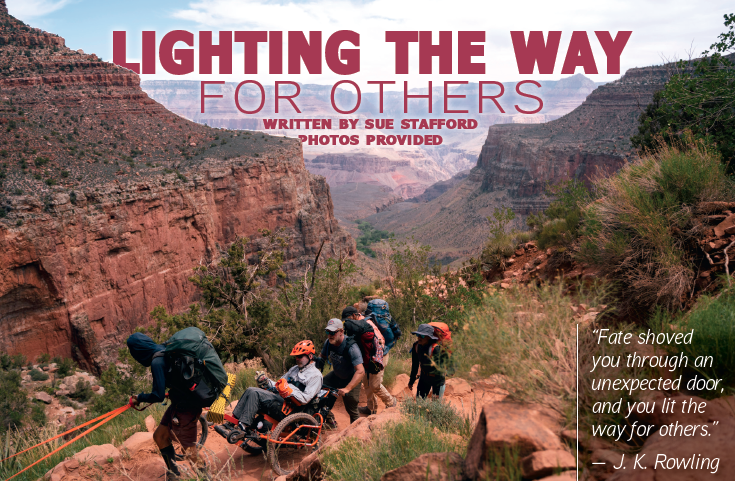
Lighting the Way for Others
Fortitude, ingenuity, optimism, perseverance, and generosity are only a few of the traits that describe Bend resident Geoff Babb, founder, co-inventor, and inspiration behind the AdvenChair, an all-terrain human-powered wheelchair that thinks it’s a mountain bike, made completely in Central Oregon.
Lighting the Way for Others
By Sue Stafford
Fortitude, ingenuity, optimism, perseverance, and generosity are only a few of the traits that describe Bend resident Geoff Babb, founder, co-inventor, and inspiration behind the AdvenChair, an all-terrain human-powered wheelchair that thinks it’s a mountain bike, made completely in Central Oregon.
This former fire ecologist for the Bureau of Land Management (BLM) in Prineville turned a life-altering brain stem stroke on November 10, 2005, (and another one on November 10, 2017 — that’s right, the same date 12 years later) into an avenue for healing, invention, and expanding his world as well as touching the lives of young and old with mobility limitations.
An avid outdoorsman raised in White Salmon, WA, who loved hiking, backpacking, skiing, and immersing himself in nature, Babb could have given up at age 48, considered himself an invalid, and led a quiet sedentary life of indoor confinement. But Babb turned his strokes into the impetus to create a heavy-duty wheelchair with mountain bike tires and brakes that would allow him to continue meeting the outdoor challenges and rewards presented by Mother Nature.
After a period of recuperation and rehab, Babb joined Oregon Adaptive Sports to return to the slopes on a sit-ski. He also utilized the equine therapy and adaptive horseback riding offered by Healing Reins.
Despite his first stroke in 2005, Babb was able to continue working for BLM for another 12 years in a leadership role on the Fire Management Team. He was able to go to fire camps when they were held in places like Sisters Middle School but at that time he couldn’t navigate pastures and other rugged terrain in his ordinary wheelchair. And he wasn’t going to let the challenges posed by trails, beaches, and woods deter him. Instead, they were an inspiration.
After his first stroke, Geoff had been working with CAD design engineer Jack Arnold and helicopter mechanic Dale Neubauer to design a rugged all-terrain chair that could get him out into nature. That first version was lovingly referred to as the FrankenChair. The first big test of that initial model came on September 26, 2016, when an attempt was made to descend into the Grand Canyon. As Geoff described it, fortuitously, the chair’s axle broke within the first two miles on the trail, providing feedback to the team about what worked and what didn’t, and adjustments were designed. The first design review of a new prototype occurred in the summer of 2017.
On November 10, 2017, Geoff experienced his second brain stem stroke, which impacted his ability to speak, swallow, and use his right hand. In his usual can-do way, Babb retired from his fire management position, saying the second stroke had now given him more time to work on the chair.
On November 10, 2018 (there’s that day again), they had the rollout party for the public unveiling of AdvenChair 1.0. Within a year they had applied for a patent. The December 2019 prototype was the AdvenChair 2.0 and marked the first sale of a chair. It sported a bright orange powder-coated finish.
As described on the AdvenChair website, “With shock-absorbing mountain bike tires, adjustable handlebars, and hand brakes, an adjustable seat and harness, a team of one to six people can navigate AdvenChair 3.0 over all types of rugged terrain, mud, sand, and snow, allowing people with mobility challenges to experience the serenity and grandeur of wild places with family and friends.”
After extensive testing and a few modifications in 2020, Babb began taking orders and received his first shipment of upgraded AdvenChair 3.0 chairs in June 2021.
In April 2022, Geoff assembled a team of 10 men and women from across the country who would serve as his “mule team” to guide Geoff and his AdvenChair to the bottom of the Grand Canyon and back up. There were 14 more volunteers providing support at the rim basecamp.
In just four days, Geoff and his team made a 20-mile round trip on the Bright Angel Trail, descending and ascending 4,800 feet each way, with 3,000 water bars, some more than a foot tall and at awkward angles, both down and back up. Water bars, made of wood or rocks, are a trail construction feature that helps prevent rain and snow runoff erosion on the trail by diverting water off the trail. Geoff and his chair needed to get over each of those 6,000 water bars with his team lifting, pulling, pushing, and braking. The squads would switch out every 20 minutes to avoid exhaustion. AdvenChairing is definitely a team sport with Geoff scouting from his chair.
Whenever they encountered a mule train on the trail, they would step to the side and stand in front of Geoff and his chair as the mules were spooked by a wheeled vehicle. The first night they camped at Indian Garden and day 2 they made it to Bright Angel Campground after maneuvering the Holy Jesus Corner on the Devil’s Corkscrew with its sharp switchbacks. Babb’s wife, Yvonne, got to push him across the bridge over the Colorado River. Fortunately, Geoff knew the AdvenChair would fit as he got the measurements from the Park Service beforehand. The return trip uphill went faster but proved more challenging, partially due to the 90-degree temperatures, requiring cooling off feet in the creek.
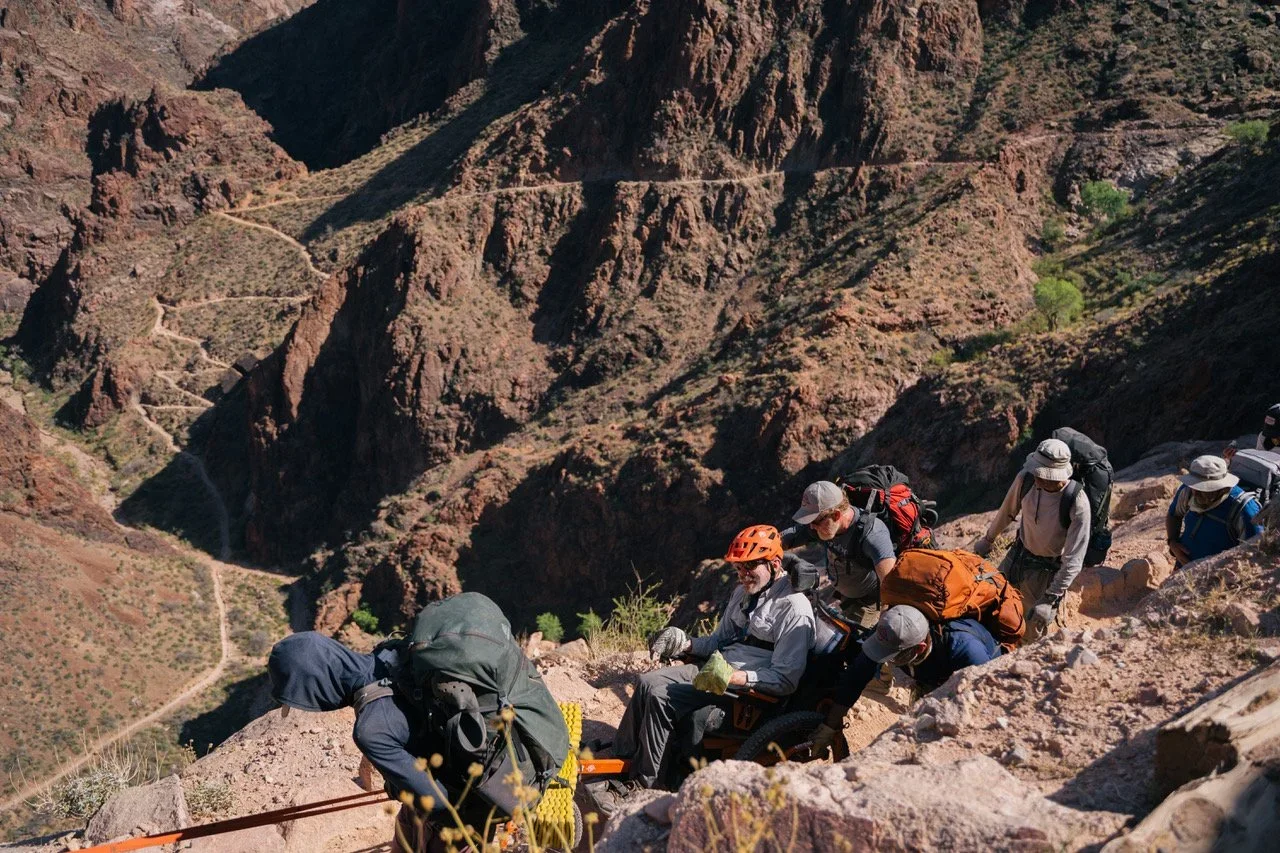
On April 28, 2022, Babb and his team accomplished his Grand AdvenChair dream of 15 years which, according to Babb, was “a once in a lifetime experience with good people.” He summed it up this way, “The biggest thing for me was to celebrate. Not only the completion of AdvenChair 3.1, but to celebrate where we are in life. I’ve come so far after my strokes and all my other medical challenges that I’ve had. To come here with a great group of people and spend four days in the Grand Canyon. Definitely not the proverbial ‘walk in the park,’ by any means. It was an epic adventure in every way. Everyone did their part — lots of leadership, lots of teamwork. I couldn’t ask for much more.”

Through all his successes and challenges, Babb’s wife of 40 years, Yvonne, has been right there with him. Babb doesn’t view himself as a victim. Rather he sees his strokes as “kind of a blessing.” The Babbs have had their challenges, but their life has been deepened. He thinks the Grand Canyon adventure is a perfect analogy for their life together. They met at an Outdoor School two-day training where Babb noticed Yvonne, an Illinois farm girl, but didn’t meet her until the camp. And the rest, as they say, is history.
To this day, Outdoor School plays a role in their lives as they have provided 14 chairs (nine in Oregon) to the camps, allowing mobility-challenged students to join in the full range of activities, providing fun attention as able-bodied students act as their team to move the chair. They can touch the plants, ride in a canoe, and be part of the whole experience.
Geoff and Yvonne have grown twin sons, Emory and Cory, who were 13 when Babb had his first stroke. He said the boys were “a big help and really responsible,” especially after they got their driver’s licenses. Cory is married, living in Arkansas, and practicing restorative agriculture, growing over 30 varieties of vegetables for area restaurants. Emory has lived in Beijing for 10 years. The Babbs visited him there in November 2025 as they celebrated their 40th wedding anniversary and marked the 20th anniversary of Geoff’s first stroke and the eighth anniversary of his second one.
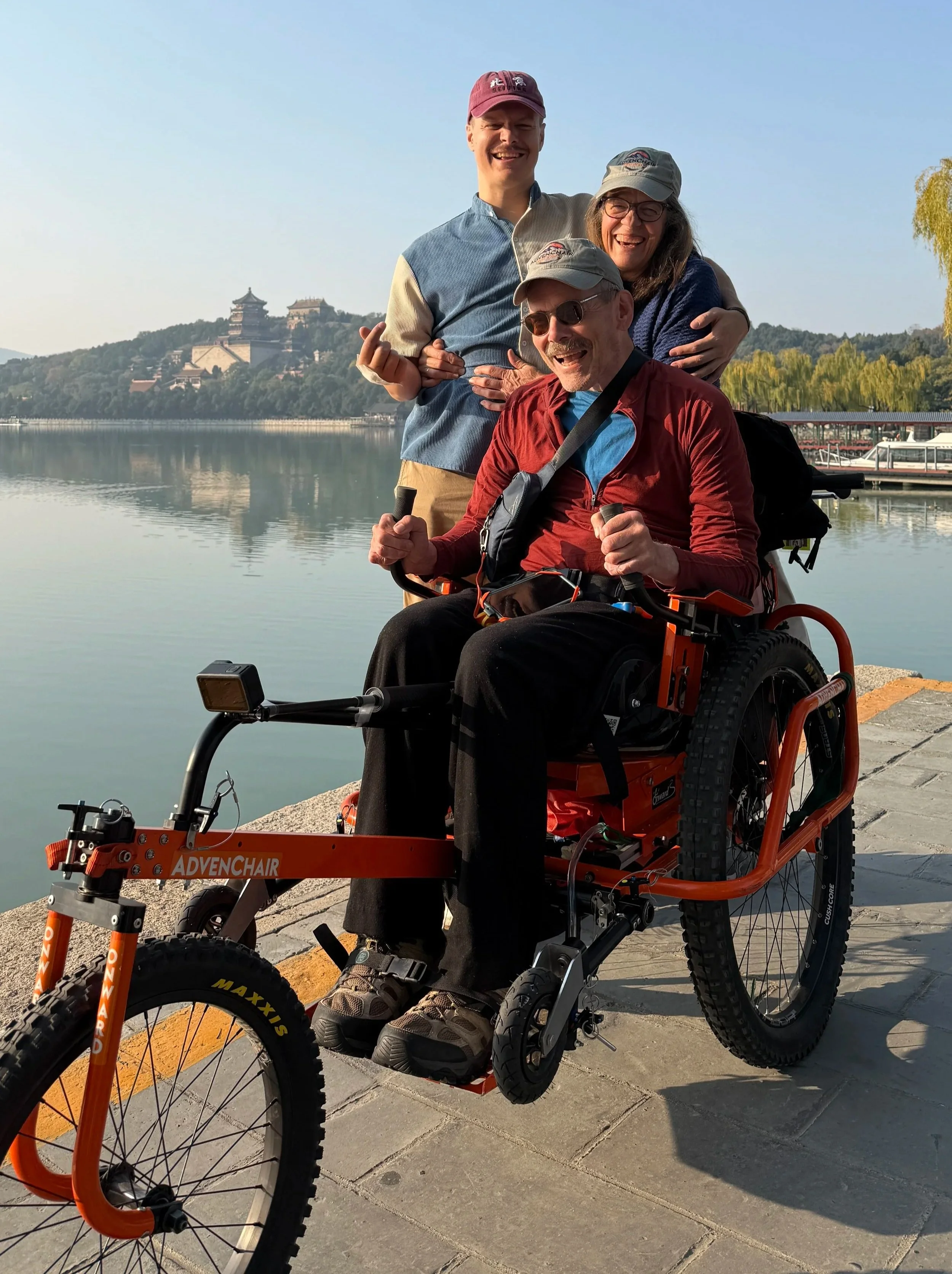
During their 19-day stay in China, with the endless traffic, myriad construction sites, and dearth of wheelchair ramps and curb cuts, touring Beijing would have been almost impossible for a regular wheelchair without the versatility, agility, and rugged features of the AdvenChair.
They explored the Forbidden City palace complex where dynasty emperors ruled China for more than 500 years. They also took in the Summer Palace and did some bird watching, encountering species new to them.
On November 10, that familiar anniversary date, they visited The Great Wall of China about 100 kilometers from Beijing on a guided tour led by Beijing Hikers, an outfitter similar to Bend’s Wanderlust Tours.
Geoff hopes to return to China. “I won’t call it a once-in-a-lifetime experience. I am deeply determined to come back to Beijing to get a few AdvenChairs rolling around the area, so that more people can experience the friendly culture and great food, not to mention explore The Great Wall and all the unique wonders of this magnificent country.”
Wanderlust Tours and AdvenChair partnered to offer a series of “AdvenTours” in 2024 and 2025 that allowed people of all ages with mobility challenges to experience interpretive hikes and adventures where the pavement ends. They led accessible tours at Smith Rock State Park, Benham Falls, Shevlin Park, the shoreline of Crater Lake, the panoramic summit of Tumalo Mountain, and along both Paulina and Tumalo creeks. Visit Central Oregon funded the first grant for AdvenTours. The 2026 schedule of AdvenTours features an assortment of familiar favorites as well as some new adventures. People can also customize their own AdvenTour. In the second year, Wanderlust opened up the AdvenTours to the general public.
“Not only did this allow for more choices and less cost for those desiring an AdvenTour, it also increased exposure of the barriers that exist for people with mobility challenges,” said Courtney Braun, co-owner of Wanderlust Tours.
“DREAM BOLDLY: The Grand AdvenChair” is a 48-minute documentary chronicling Geoff Babb’s 2022 adventure with 10 team members to the bottom of the Grand Canyon in his AdvenChair 3.1, and the events leading up to it. It can be viewed online at Dream Boldly or on the AdvenChair website.
AdvenChair has provided access to iconic and challenging destinations on four different continents, including Machu Picchu in Peru and the Camino de Fatima in Portugal besides the Grand Canyon and The Great Wall of China.
In 2025, The Onward Project EIN 33-1289851 attained IRS 501(c)(3) nonprofit status. Their mission is to inspire and empower those with mobility challenges to access and enjoy nature through experiences, community support, equipment, training, and advocacy. They do that primarily through experiences with the AdvenChair.
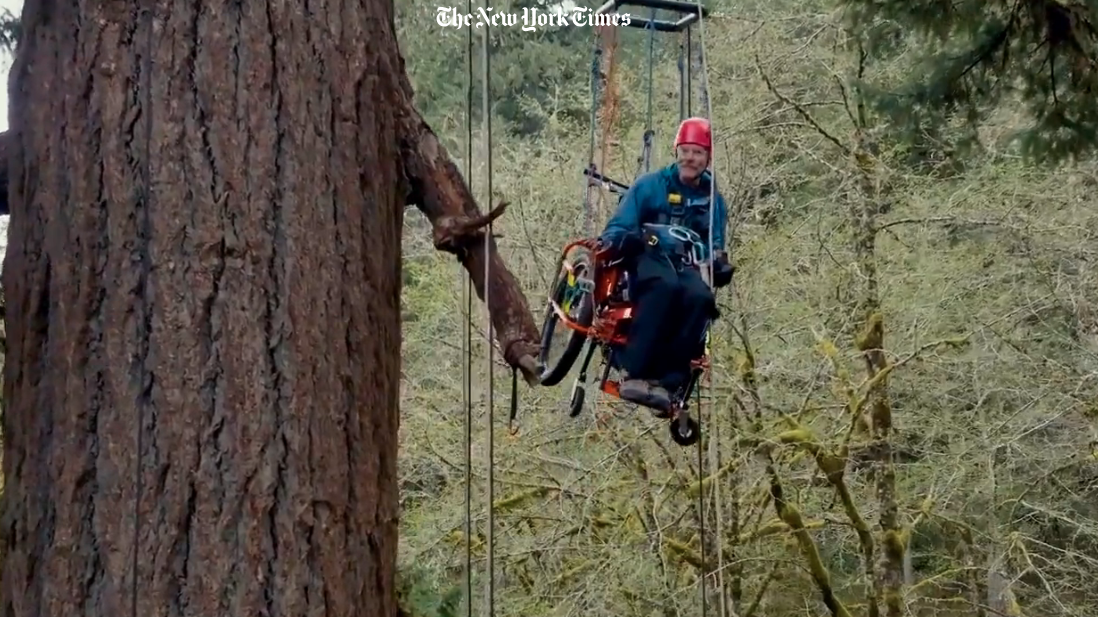
Finding Freedom at 110 Feet in the Air
For disabled travelers in search of adventure, there are a growing number of adrenaline-fueled options. In Oregon, one wheelchair user went tree-climbing. That climber was Geoff Babb, in his AdvenChair off-road wheelchair.

Geoff Babb, 68, from Bend, Ore., made two ascents as part of an adaptive tree climbing adventure in the state’s Silver Falls park, once in a climbing harness and once in his wheelchair.
New York Times
By Sonia A. Rao Visuals by Michael Hanson
Sonia A. Rao writes about disability issues. She reported from Oregon.
Geoff Babb pulled up in the passenger seat of his big blue van, past the thick Western red cedars and the towering Douglas firs. As a friend rolled his bright orange wheelchair down the van’s ramp, Mr. Babb turned to the man in a helmet and climbing harness who greeted him.
Before he was ready to follow the guide into the old-growth forest, Mr. Babb had a few questions: How high can I go? How often do you switch out the ropes? Will they hold in the rain?
Leo Fischer, the owner of a tree-climbing outfitter at Silver Falls State Park in Oregon, patiently answered each one. Nerves were common for first-time climbers.
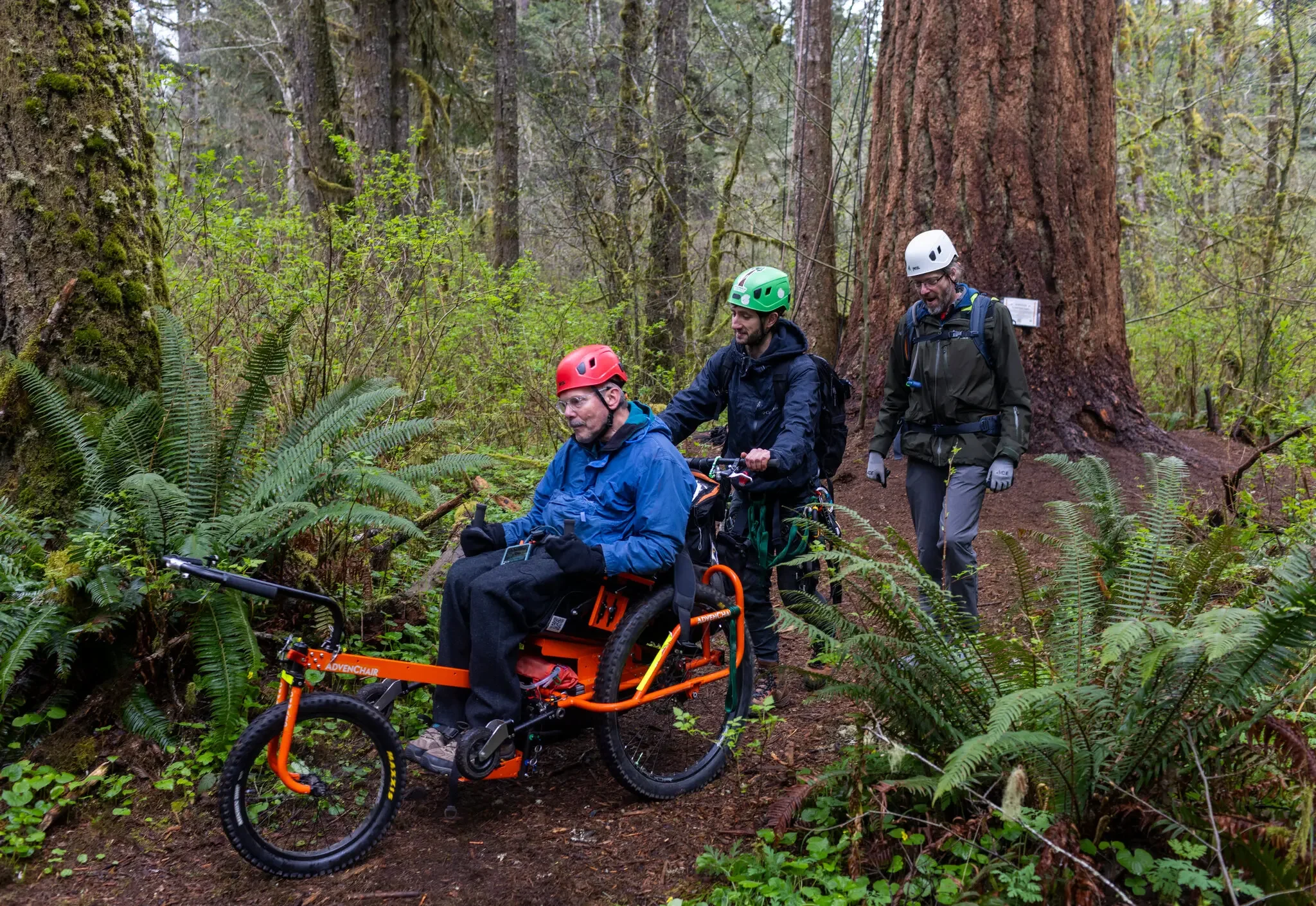
Mr. Babb’s AdvenChair wheelchair was designed for difficult terrain; he’s used it to hike in the Grand Canyon and along the Great Wall of China.
But Mr. Babb, 68, from Bend, Ore., was much more excited than nervous. Once an avid rock climber, he had a stroke 20 years ago that left him in a wheelchair, with limited use of his right hand. Another stroke in 2017 further worsened his speech and mobility.
Since becoming disabled, Mr. Babb has participated in activities like sit-skiing and horseback riding. In his wheelchair, which he designed to traverse uneven terrain, he hiked to the bottom of the Grand Canyon and along the Great Wall of China. But he hadn’t been able to ascend to the heights he had reached before his stroke.
That was about to change.
When Mr. Babb met Mr. Fischer at a conference earlier this year and learned that his company, Tree Climbing at Silver Falls, had an adaptive option for people with mobility disabilities, he jumped at the chance.
“I just wanted to get off the ground,” Mr. Babb said.
A Boom in Accessible Adventure
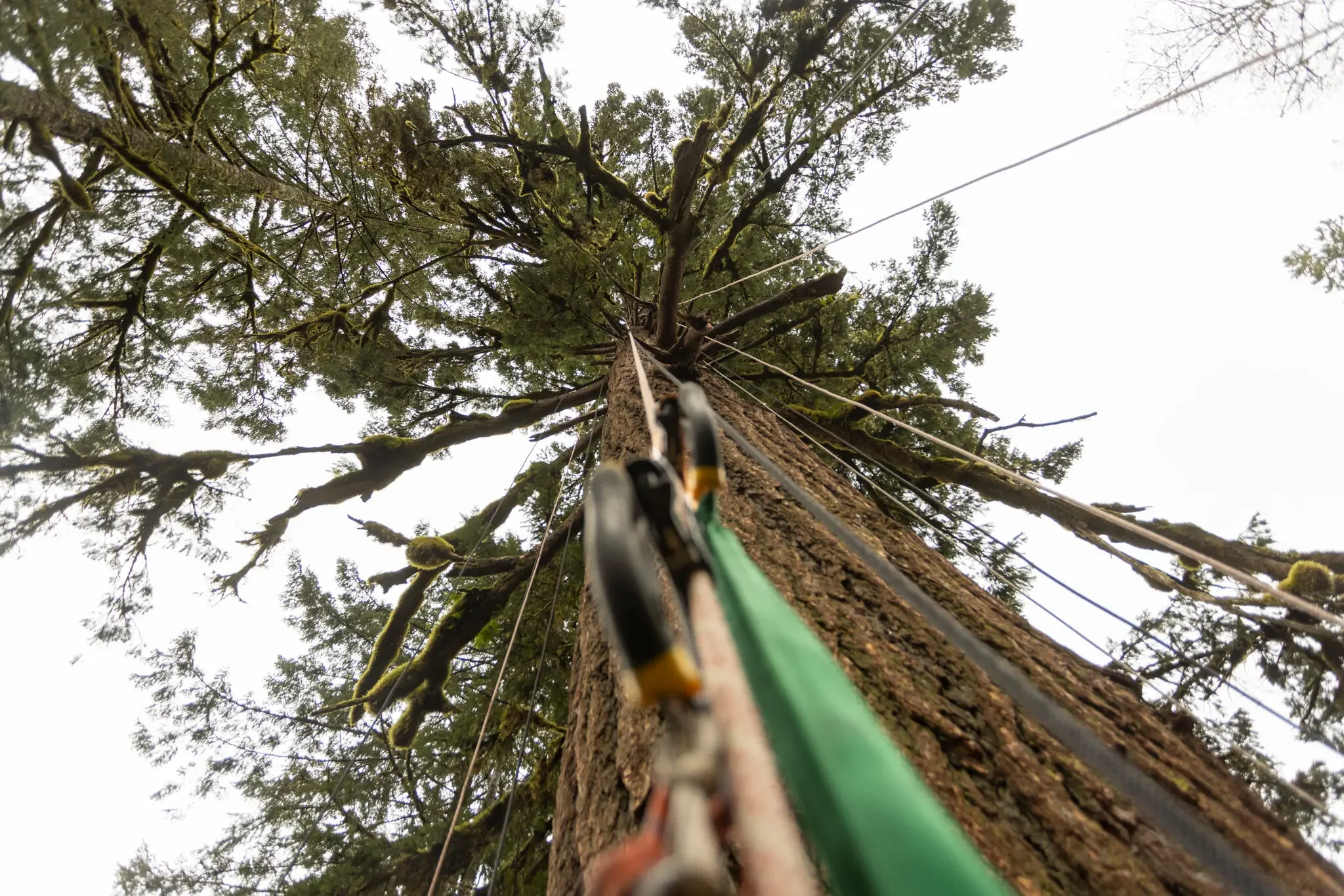
Mr. Babb could control the speed of his AdvenChair ascent of the Douglas fir using an app on his phone.
Americans with disabilities spent around $50 billion on travel in 2022 and 2023, according to a report from the Open Doors Organization, an accessible travel nonprofit. While there are no specific numbers for adventure trips, the opportunities available are expanding, said Eric Lipp, the Open Doors Organization’s executive director. “Adventure travel is enormous,” he said. “People want to do everything now.”
In 2004, a spinal cord injury from a car accident left Alvaro Silberstein paralyzed from the waist down. When, in 2016, he posted online about traversing 50 miles through Patagonia in a wheelchair, his story went viral. He received hundreds of messages from people asking how they could replicate his trip. Two years later, Mr. Silberstein created Wheel the World, a San Francisco-based company focused on accessible travel.
Now, people with physical disabilities who travel with Wheel the World’s partners can kayak in Florida, summit the Haleakala crater in Maui, and surf in California or Costa Rica. In 2023, almost 3,000 people booked accessible trips through Wheel the World. By 2025, that number tripled to more than 9,000.
“Access to nature, adventure, it gives you confidence for anything else,” Mr. Silberstein said.
In addition to Wheel the World, similar platforms like accessibleGO and Travegali have also launched. People with mobility limitations can go on off-roading in Mallorca, Spain, or mountain biking in Colorado; and blind travelers can white water raft through tropical rainforests in Costa Rica, accompanied by sighted guides.
Shane Burcaw, a content creator who was born with spinal muscular atrophy and uses a power wheelchair, has noticed the rise in such adventurous activities. Last year, he participated in adaptive tree climbing at Silver Falls. He didn’t feel comfortable leaving his wheelchair, so the crew hooked him and his 450-pound chair to ropes and battery-powered ascenders.
As he rose up the 400-year-old, 200-feet-tall Douglas fir tree, he broke into a sweat with fear, screamed with excitement and cried with joy, he said. “It was the thrill of the lifetime.”
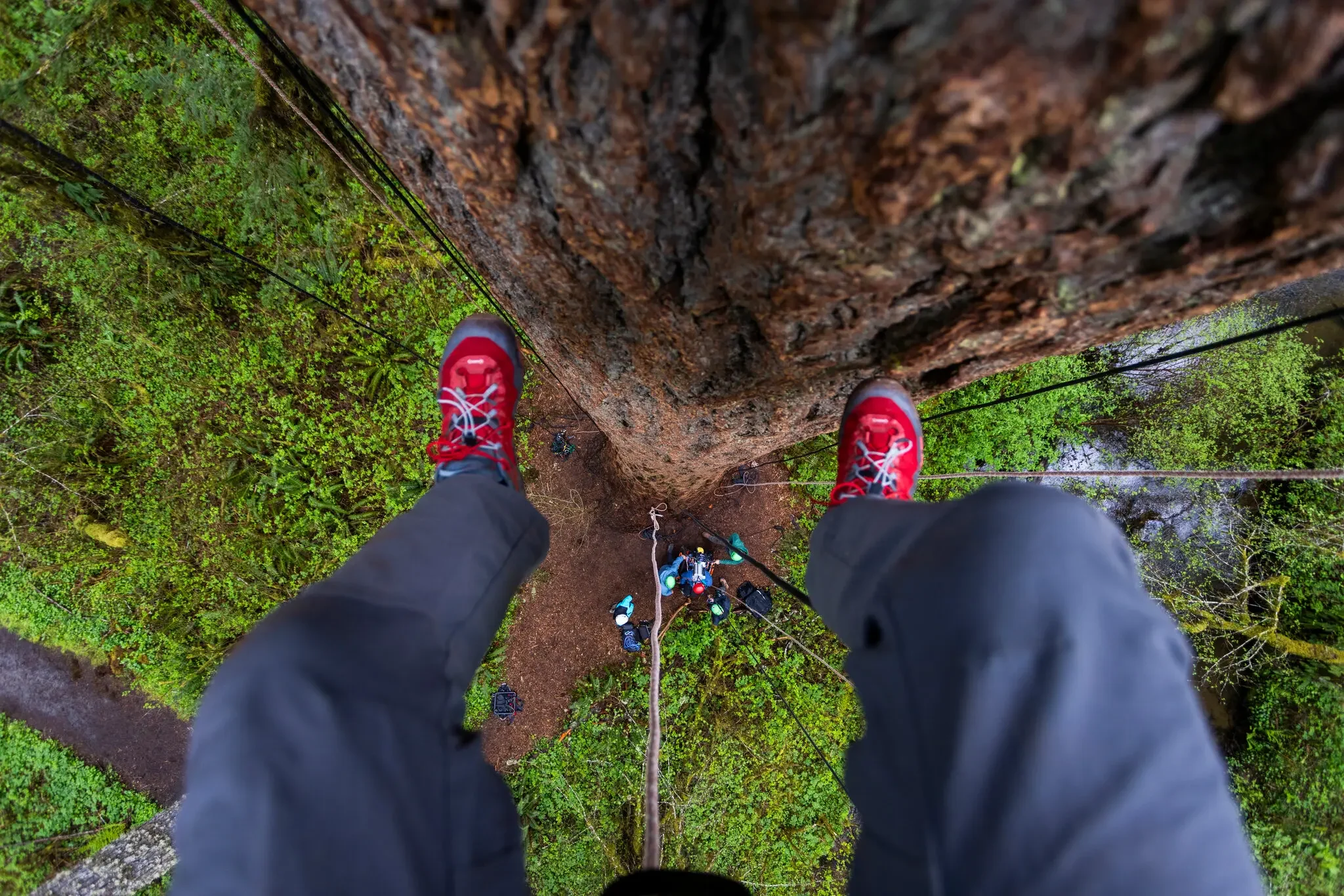
The view from the treetop.
Erin Taylor was diagnosed with A.L.S., the terminal, neurodegenerative disease, three years ago when she was 23 years old. She experienced similar exhilaration when paragliding for the first time in California last March through a nonprofit called Adaptive Impact.
She soared through the air on an adaptive trike, looking out at the Pacific Ocean, the wind whipping in her face, and said she briefly forgot all about her health struggles.
“I felt like a bird,” said Ms. Taylor, who since her diagnosis has lost the use of her hands and arms and now has difficulty speaking.
She loved it so much that she did it again in July. Then, she decided to go skydiving. Next, she wants to try riding in a hot-air balloon, white-water rafting and sailing.
“It’s the focus on what I can do versus what I can’t do anymore that feels so satisfying,” she said in an email. Nothing reminds you that you’re alive, she added, more than jumping out of a plane.
“It Felt Very Freeing”
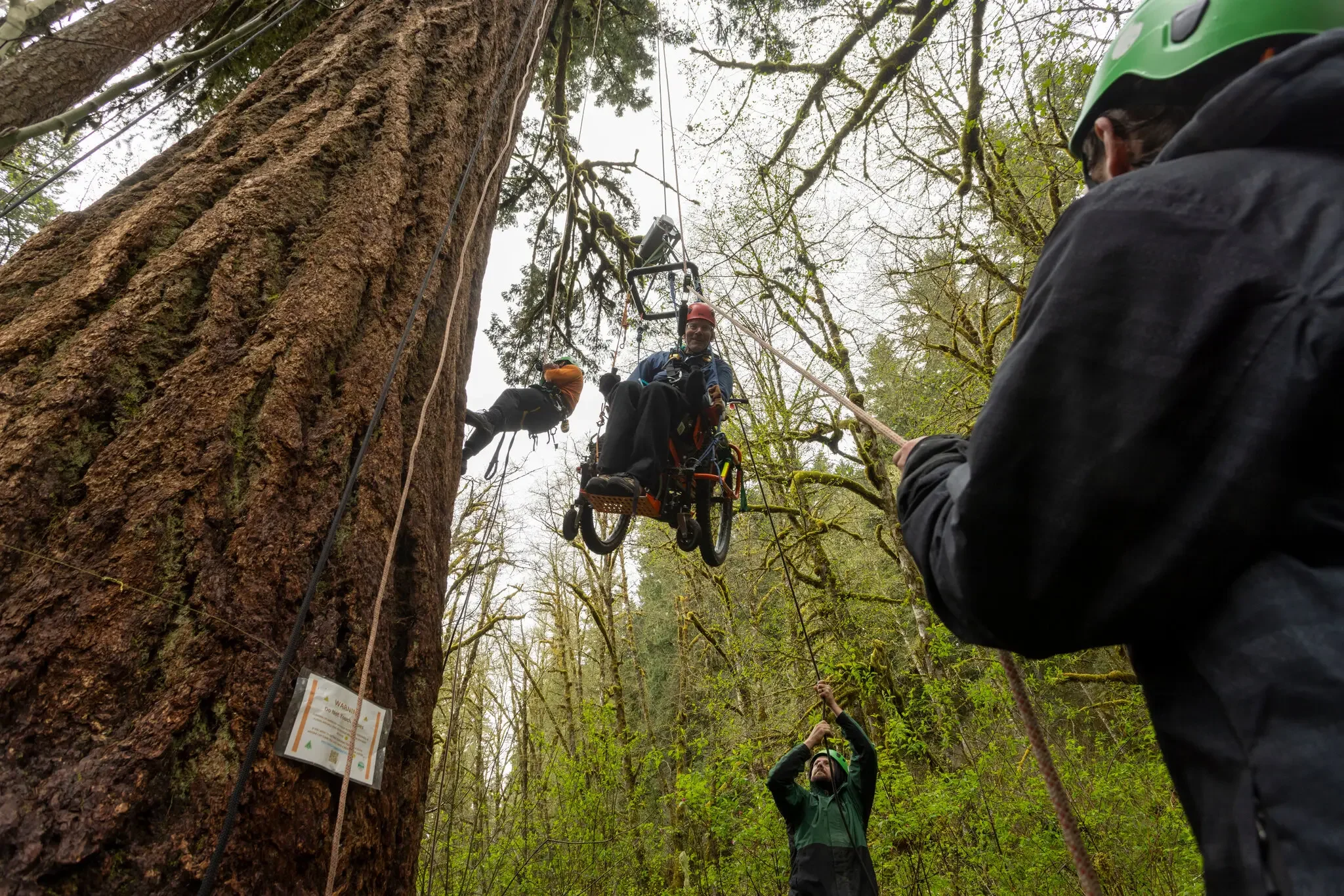
An elated Mr. Babb descends back to earth in his AdvenChair.
Mr. Fischer said that adapting outdoor experiences like tree climbing for people with disabilities isn’t difficult — it just takes a little innovation.
“Really, anybody can do it if they want to do it,” he said.
At Silver Falls State Park, as Mr. Babb prepared to climb the old-growth tree, instructors transferred him from his wheelchair to a chair harness, which was tied with thick knots to a motorized rope-climbing device. It was connected to a phone app that allowed Mr. Babb to control his own ascent into the canopy.
He began to smile as soon as his feet lifted off the ground.
“I’m up!” he exclaimed, gripping the harness tightly.
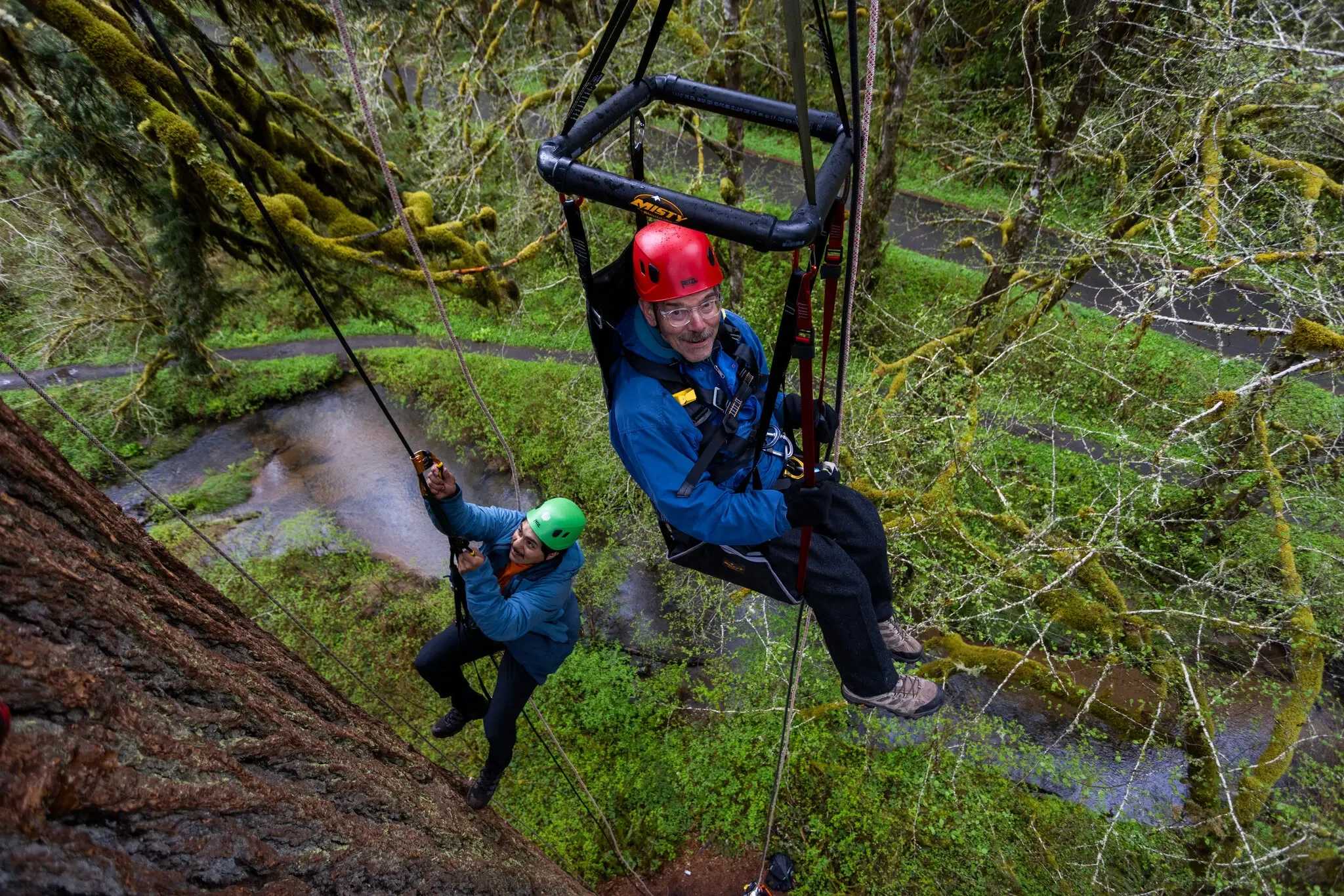
Mr. Babb in his AdvenChair with Ramon Moreno, one of the workers assisting with his climb.
He rose to 110 feet off the ground; higher than he had been in decades.
From his new aerial view point, he gazed out over the top of the tree canopy, saw a nearby winding stream and noticed flowers he hadn’t seen from the ground. He closed his eyes, smelling the damp bark and enjoying a quiet that was occasionally punctured by scattered birdsong.
“Up that high, it felt very freeing,” he said once he’d been lowered back down to the group. “I haven’t felt that before,” he added.
Then he asked if he could do it again.
Follow New York Times Travel on Instagram and sign up for our Travel Dispatch newsletter to get expert tips on traveling smarter and inspiration for your next vacation. Dreaming up a future getaway or just armchair traveling? Check out our 52 Places to Go in 2026.
Sonia A. Rao reports on disability issues as a member of the 2025-26 Times Fellowship class, a program for early-career journalists.
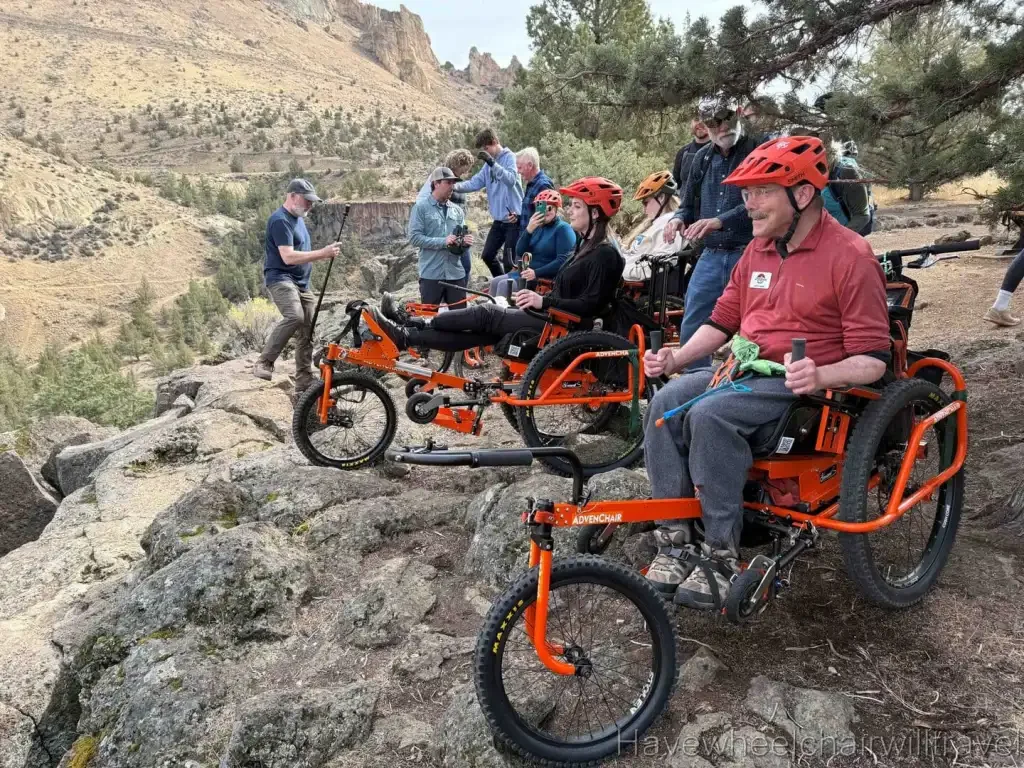
AdvenChair all-terrain accessible hiking chair adventures Oregon
While in Oregon, I had the opportunity to participate in a group adventure at Smith Rock, a jaw-droppingly beautiful state park. Our group consisted of three wheelchair users including Geoff (AdvenChair), Kelcie (The Chronic Explorer) Kristy (Kristy Durso) and Phoenyx (Phoenyx Travels) and a team of volunteers that provided the human-power behind the AdvenChairs.

AdvenChair all-terrain accessible hiking chair
Geoff Babb has opened up a world of possibilities for visitors to Oregon by inventing the AdvenChair.
After suffering a stroke, Geoff discovered that the biggest obstacle to experiencing the great outdoors with his family again was not so much the limitations of his body, but his inflexible wheelchair. Not satisfied with sticking to a paved route in the great outdoors, Geoff worked with others to develop the AdvenChair. A chair that has taken Geoff off-road in Oregon and most recently, along the Great Wall of China.
While in Oregon, I had the opportunity to participate in a group adventure at Smith Rock, a jaw-droppingly beautiful state park.
Our group consisted of three wheelchair users including Geoff (AdvenChair), Kelcie (The Chronic Explorer) Kristy (Kristy Durso) and Phoenyx (Phoenyx Travels) and a team of volunteers that provided the human-power behind the AdvenChairs. The volunteers team up to do a mixture of pushing and pulling the accessible hiking chairs. The amount of people-power required depends on the trail surface and inclination of the hike.
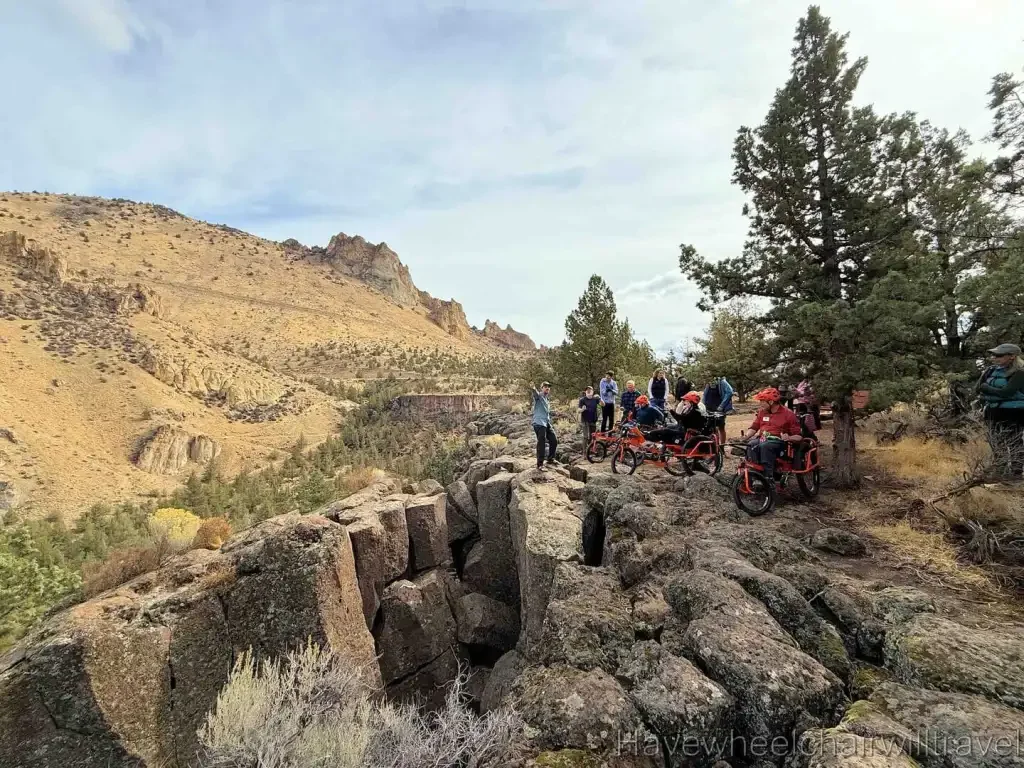
What makes the experience with the AdvenChair richer is the collaboration with Wanderlust Tours who offer a unique brand of interpretive hikes and adventures. Thanks to the partnership, people of all ages with mobility challenges can now experience some of Oregon’s most iconic natural places with greater depth, education, and appreciation.
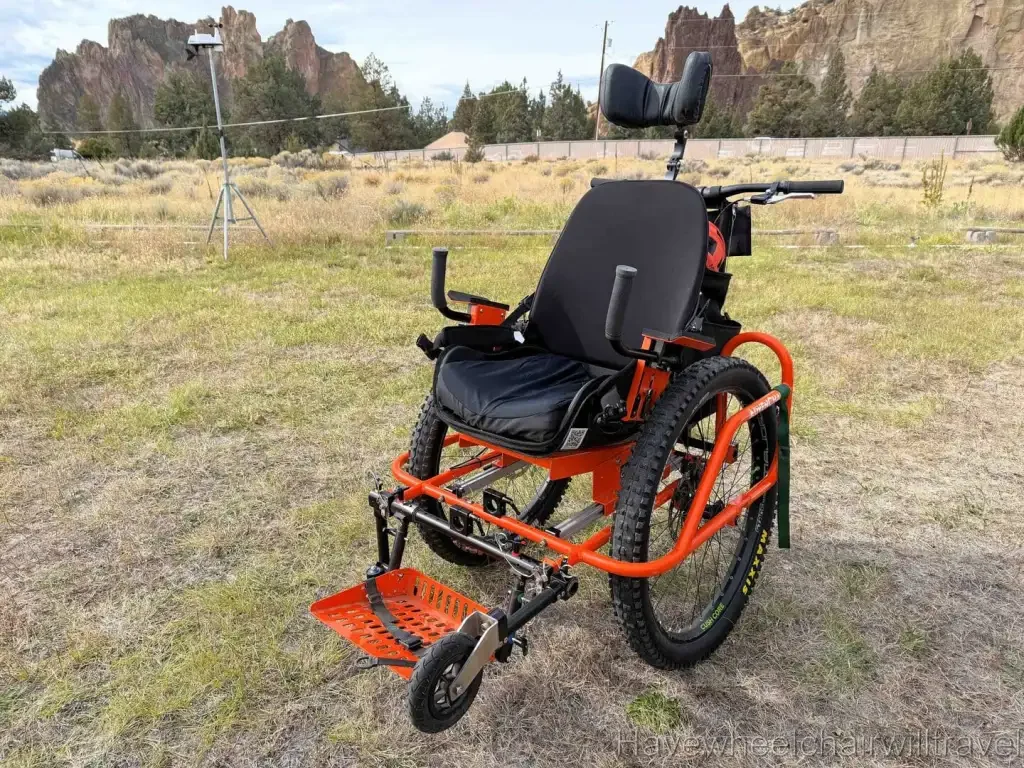
Knowing that there is a no one-size-fits all approach to accessibility and equipment, I was particularly impressed with the flexibility of set-up of the AdvenChair. Each member of our party had the chair adjusted to their needs and additional support is offered when needed, such as a headrest.
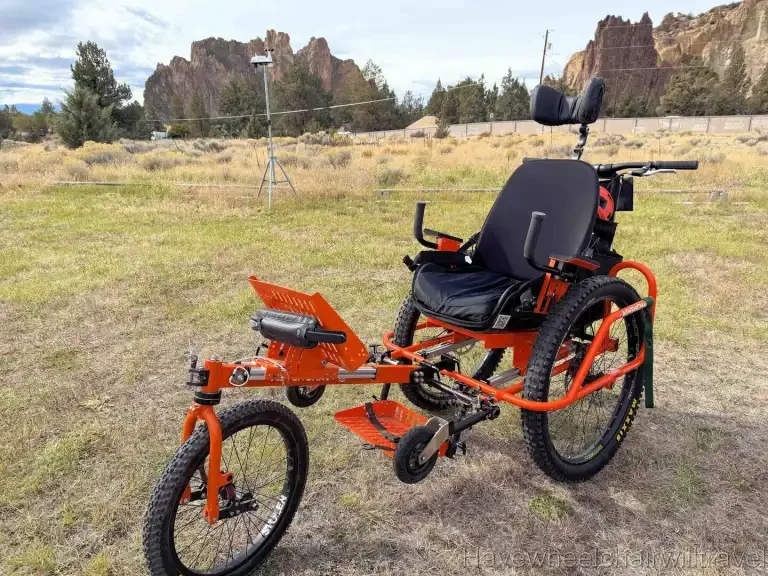
The footplate can either allow a user to have their legs in a raised level position or in a standard seated position.
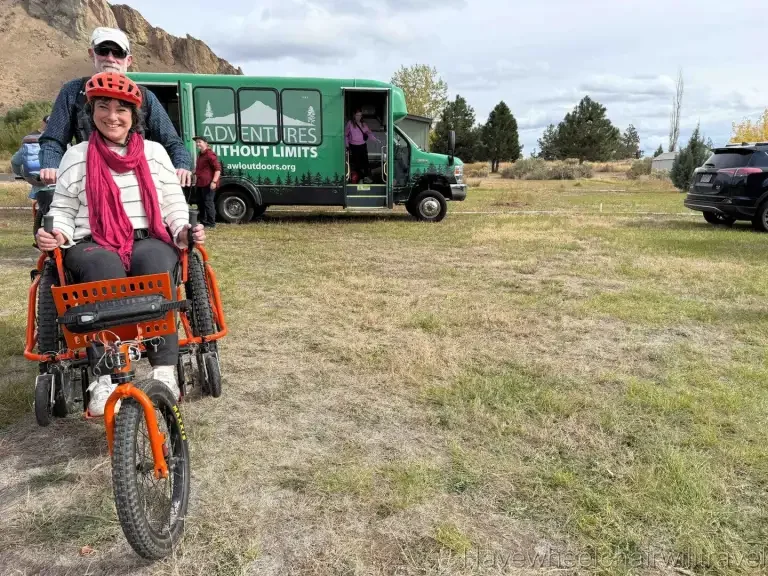
After everyone had returned from the hike I had a go to test the suspension and comfort of the AdvenChair. I found the seat supportive and comfortable.
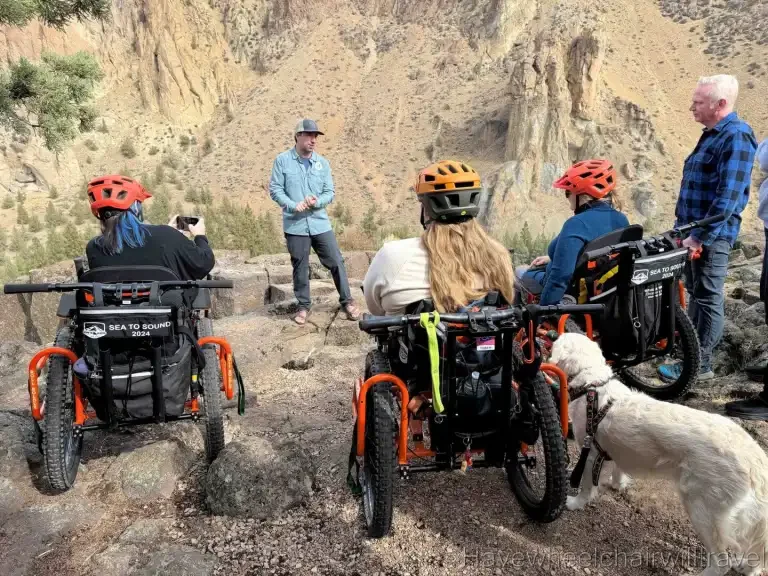
It’s particularly wonderful to see a group able to participate and enjoy nature together. There’s something special about bonding over such stunning scenery.
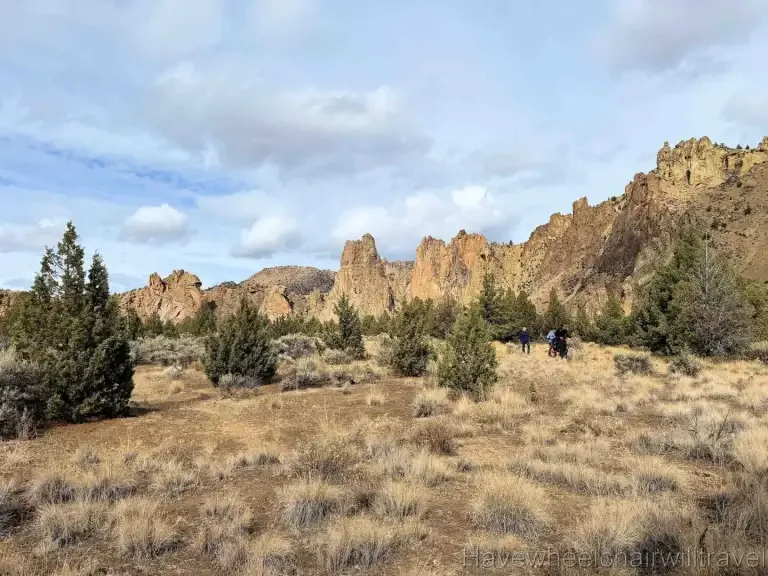
If you don’t require the AdvenChair and have off-road wheels or have a power wheelchair, I would still recommend a visit to Smith Rock State Park. Pathways are a mixture of gravel and small rocks. Without doing an ambitious trail you can still appreciate the grandeur.
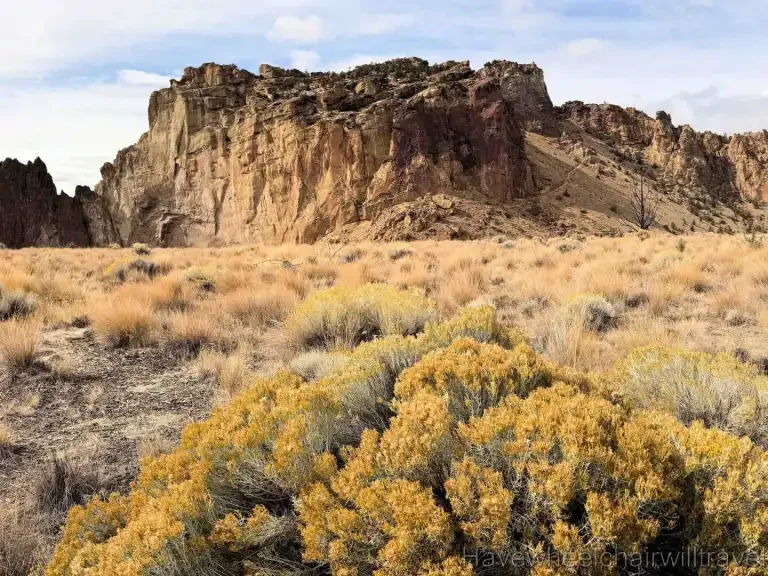
If you are interested in reading more about Geoff’s story, the development of the AdvenChair or booking a tour with AdvenChair and Wanderlust Tours, visit the AdvenChair website.
If you are visiting Oregon and looking for other ways to connect with nature, you may like to read Have Wheelchair Will Travel reviews below –

Video: Andy’s Adventures: Wanderlust Tours with AdvenChair in Central Oregon
In the northwest, we’re known for our beautiful vistas and challenging hikes. But for people with mobility issues, many of those sights remain out of reach. In this Fox 12 Oregon episode of Andy’s Adventures, Andy Carson introduces you to a device that promises to change that. He went to Smith Rock State Park and met the inventor of the AdvenChair.
In this Andy’s Adventures, Andy Carson went to Smith Rock State Park and met the inventor of the AdvenChair.
KPTV.com Fox 12
By Andy Carson
DESCHUTES COUNTY, Ore. (KPTV) - In the northwest, we’re known for our beautiful vistas and challenging hikes. But for people with mobility issues, many of those sights remain out of reach. In this Fox 12 Oregon episode of Andy’s Adventures, Andy Carson introduces you to a device that promises to change that. He went to Smith Rock State Park and met the inventor of the AdvenChair, Geoff Babb.
For more details about AdvenChair and Wanderlust Tours, click here and here.

Video: Oregon’s travel and tourism industry hits Convention Center this week
On Monday night, many of Oregon’s leading members of the travel and tourism industry were honored during the Achievement Awards at the 2025 Oregon Governor’s Conference on Tourism at the Oregon Convention Center. More than 600 professionals gathered for the event to share ideas, while also discussing how to improve the quality of life, culture, diversity, ecosystem, and economy of communities across the state through these partnerships hosted by Travel Oregon and Portland.
Many of Oregon’s leading members of the travel and tourism industry were honored during the Achievement Awards.
KPTV.com Fox 12
By Dylan Scott
PORTLAND Ore. (KPTV) - On Monday night, many of Oregon’s leading members of the travel and tourism industry were honored during the Achievement Awards at the 2025 Oregon Governor’s Conference on Tourism at the Oregon Convention Center.
More than 600 professionals gathered for the event to share ideas, while also discussing how to improve the quality of life, culture, diversity, ecosystem, and economy of communities across the state through these partnerships hosted by Travel Oregon and Portland.
This year’s ceremony recognized breakthrough achievements across the state, including the following award winners:
Governor’s Award (PDX Next)
Leadership Award (Ana DeVincentis)
Stewardship Award (Alanna Kieffer)
Hospitality Award (Jason Coleman)
Gene Landsmann Gemütlichkeit Award (Dan Schindler)
DEI Award (Remy Drabkin)
Partnership Award (Wanderlust Tours/AdvenChair)